April 2025
Dynamic Speed Limit on Tangenziale di Napoli
The “Dynamic Speed Limit” trial was launched on the Tangenziale di Napoli to optimise vehicle speed.
The Dynamic Speed Limit project represents a tangible step towards increasingly intelligent, safe and efficient mobility. The trial, promoted by the Ministry of Infrastructure and Transport as part of the activities of the National Centre for Sustainable Mobility (MOST), took place on the Tangenziale di Napoli using technology developed by Movyon.
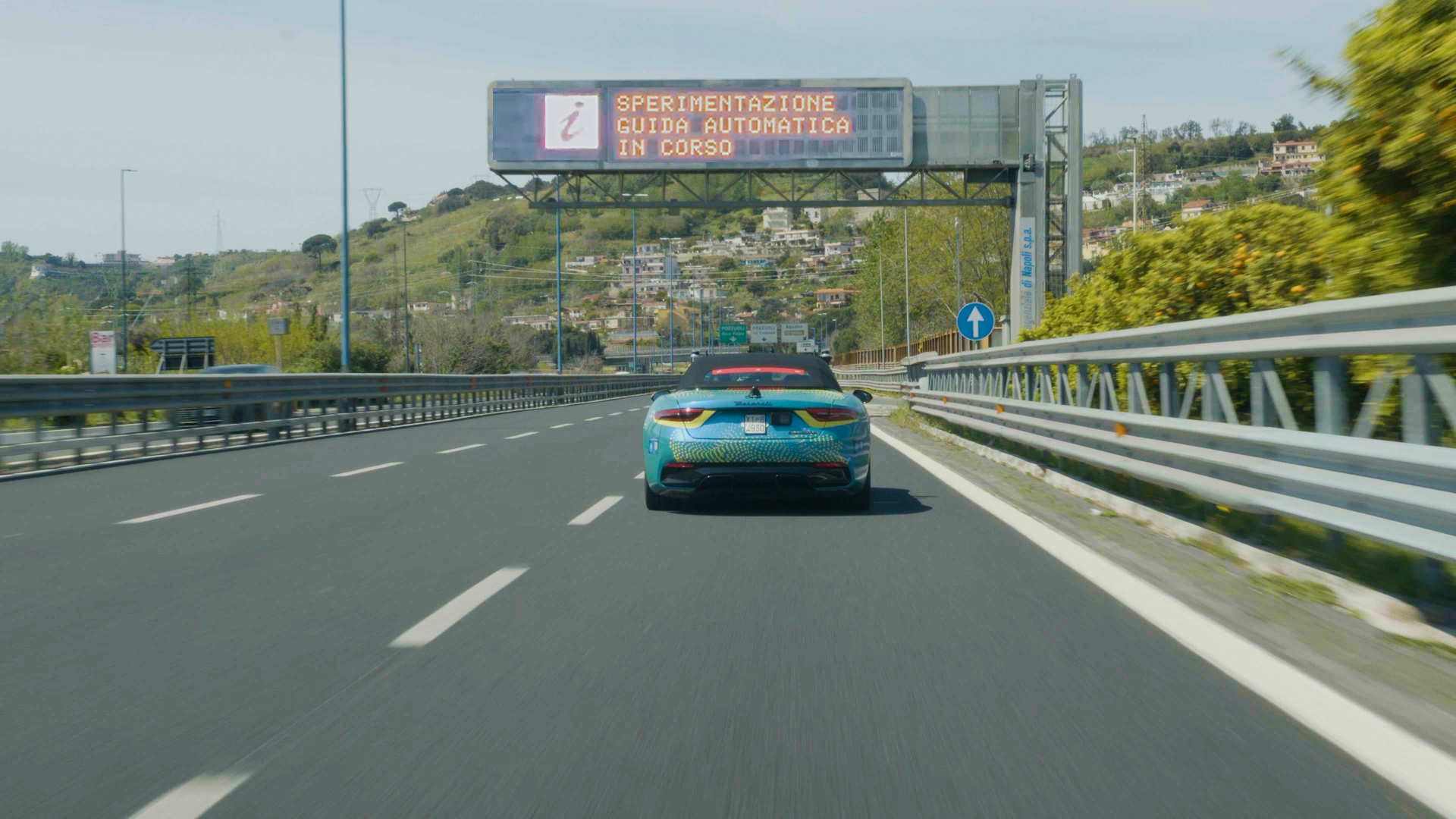
For the first time in Italy, it was possible to provide connected vehicles in real time — including a self-driving Maserati GranCabrio Folgore equipped with the robo-driver developed by Politecnico di Milano — with guidance on the optimal speed to maintain along a motorway section open to traffic. The aim is to prevent congestion, improve traffic flow, enhance the driving experience and reduce emissions and journey times by up to 15%.
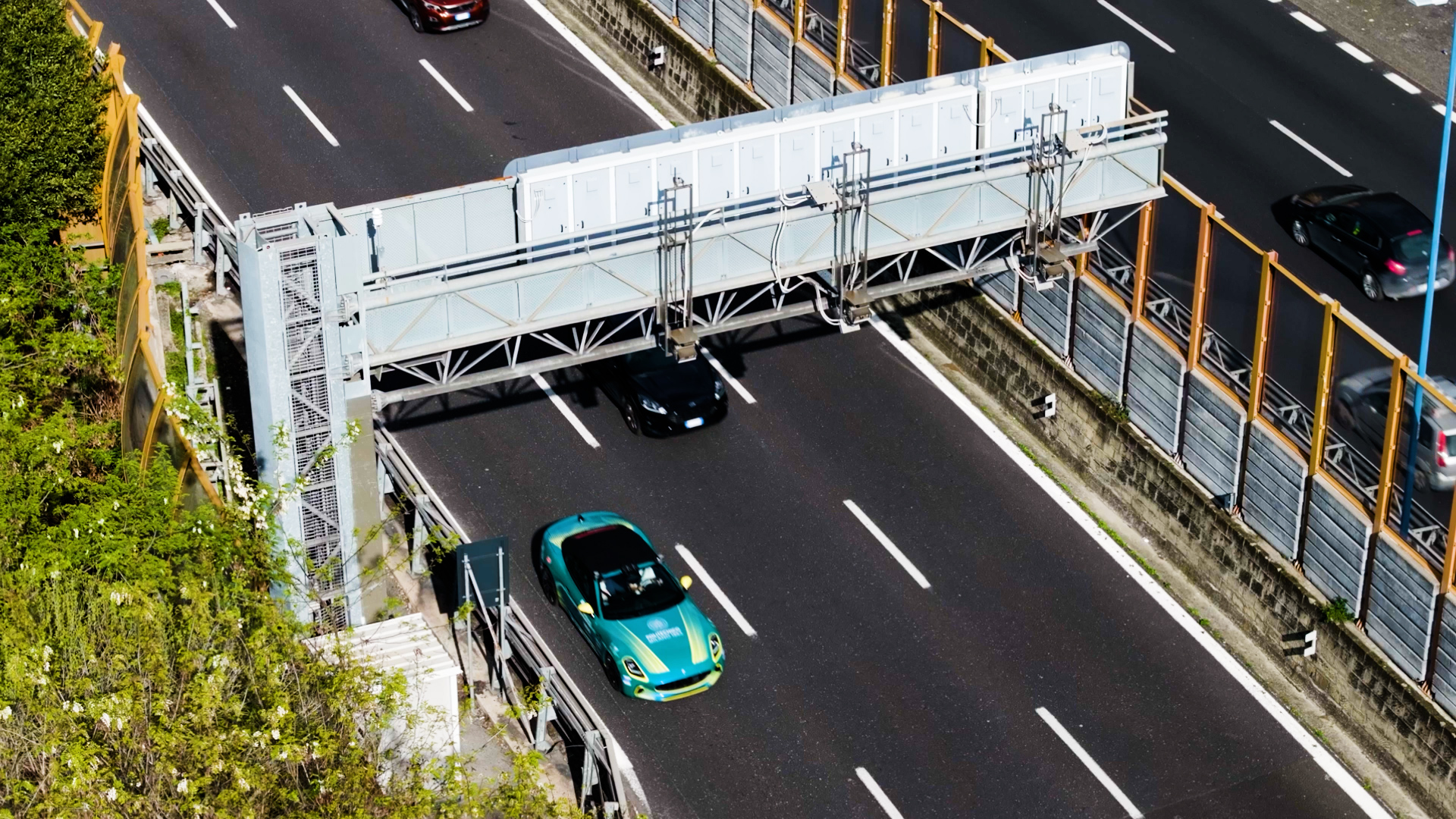
The system developed by Movyon enables direct communication between the infrastructure and vehicles through a network of antennas distributed along the road section and onboard vehicle devices. Information collected by traffic sensors, gantries and smart cameras is processed by the traffic model developed by the University of Naples Federico II, which is able to suggest the most suitable speed to ensure optimal traffic flow.
During the trial, both a connected autonomous vehicle capable of automatically adjusting its speed in line with the instructions received and several Tangenziale di Napoli vehicles were used. These vehicles were enabled to receive the same information and make it available to the driver via a tablet installed in the vehicle.
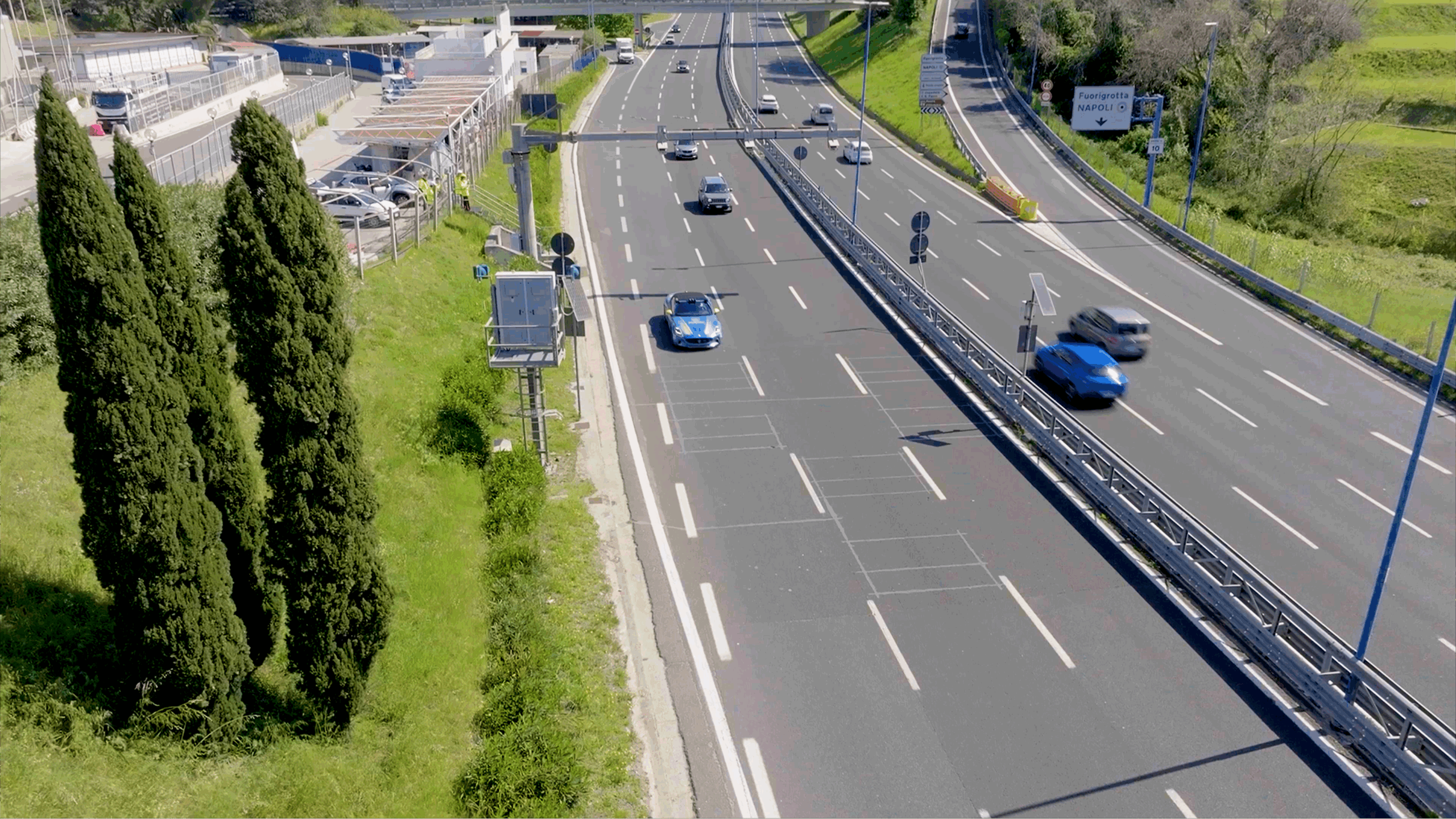
In this way, connected vehicles adapted their speed in real time to network conditions, promoting a “green wave” effect, reducing waiting times and increasing overall safety. The first tests, carried out on a 3 km section between Vomero and Fuorigrotta, have already shown significant results. In just a few days, around 3.5 million transit data points per day were collected and processed, including vehicle class and speed, lane, length and time gap from the vehicle ahead (headway).