Connected mobility for smart infrastructure
Cooperative technologies and digital platforms to evolve the role of road operators.

Cooperative Intelligent Transport Systems (C-ITS) enable real-time communication between vehicles and infrastructure, allowing road operators to manage mobility in a safer, more efficient and proactive way.
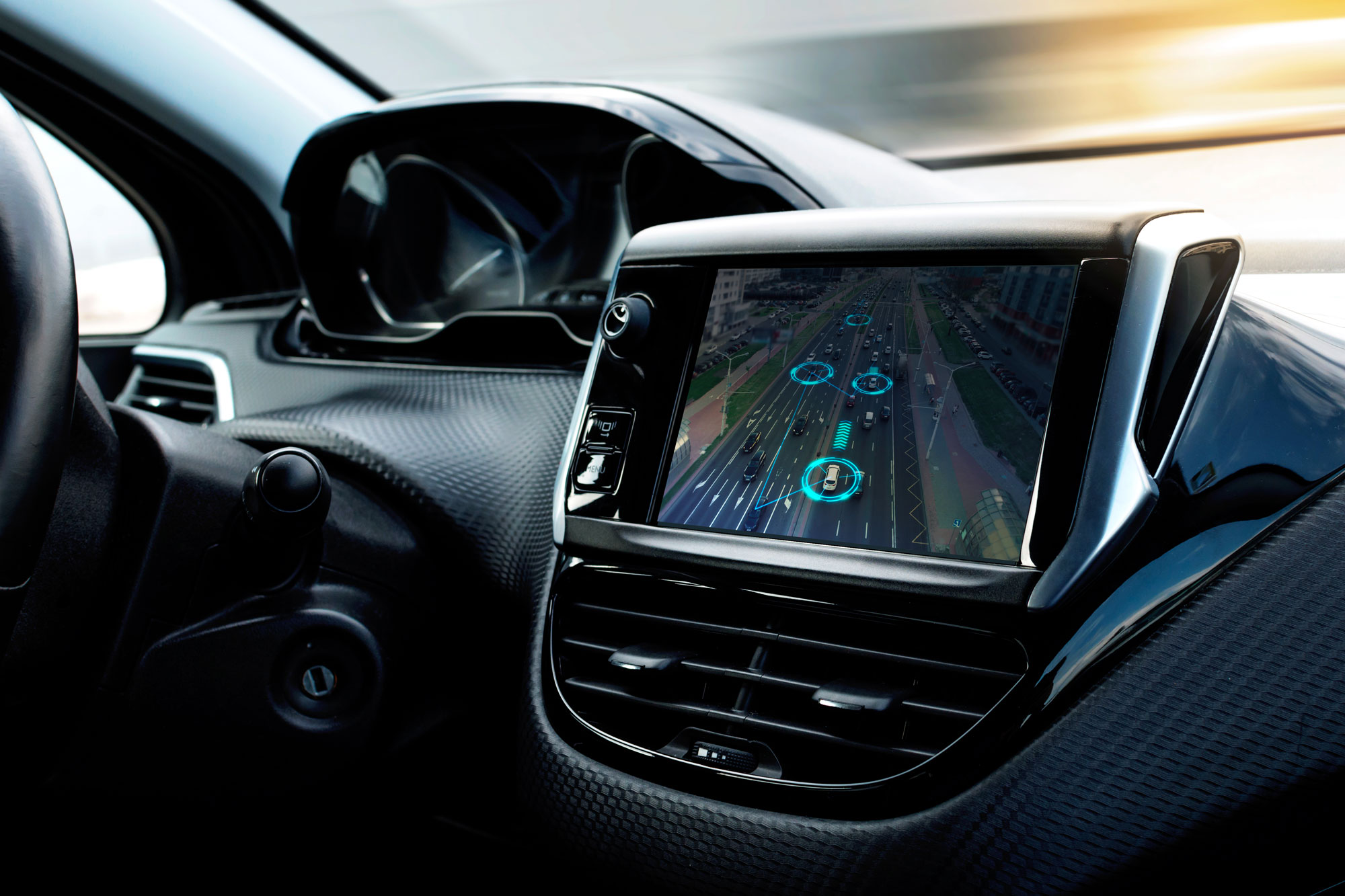
Mobility is evolving from a model based on static information, such as variable message signs, radio or apps consulted before travelling, to a dynamic and connected ecosystem in which roads, vehicles and digital systems continuously collaborate through real-time data exchange.
In this scenario, it is no longer only the vehicle that is intelligent: the infrastructure itself is transformed into a digital asset capable of collecting data from the field, interpreting it and turning it into operational information for users and operators.
For the road operator, this means evolving from an infrastructure operator into a true mobility orchestrator, with a greater ability to anticipate critical events, coordinate traffic flows and optimise network management through an increasingly data-driven approach.
From data collection to proactive network management
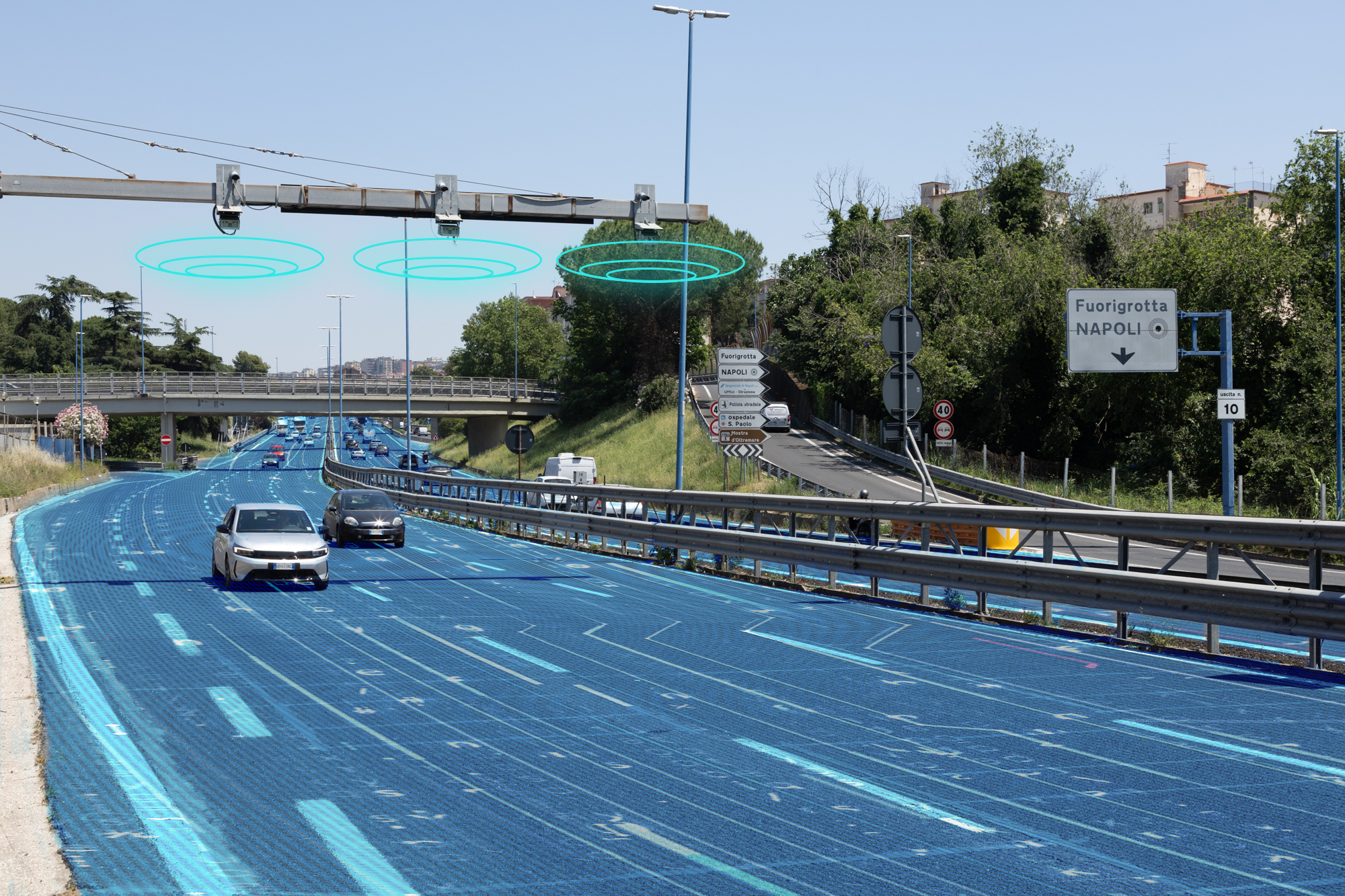
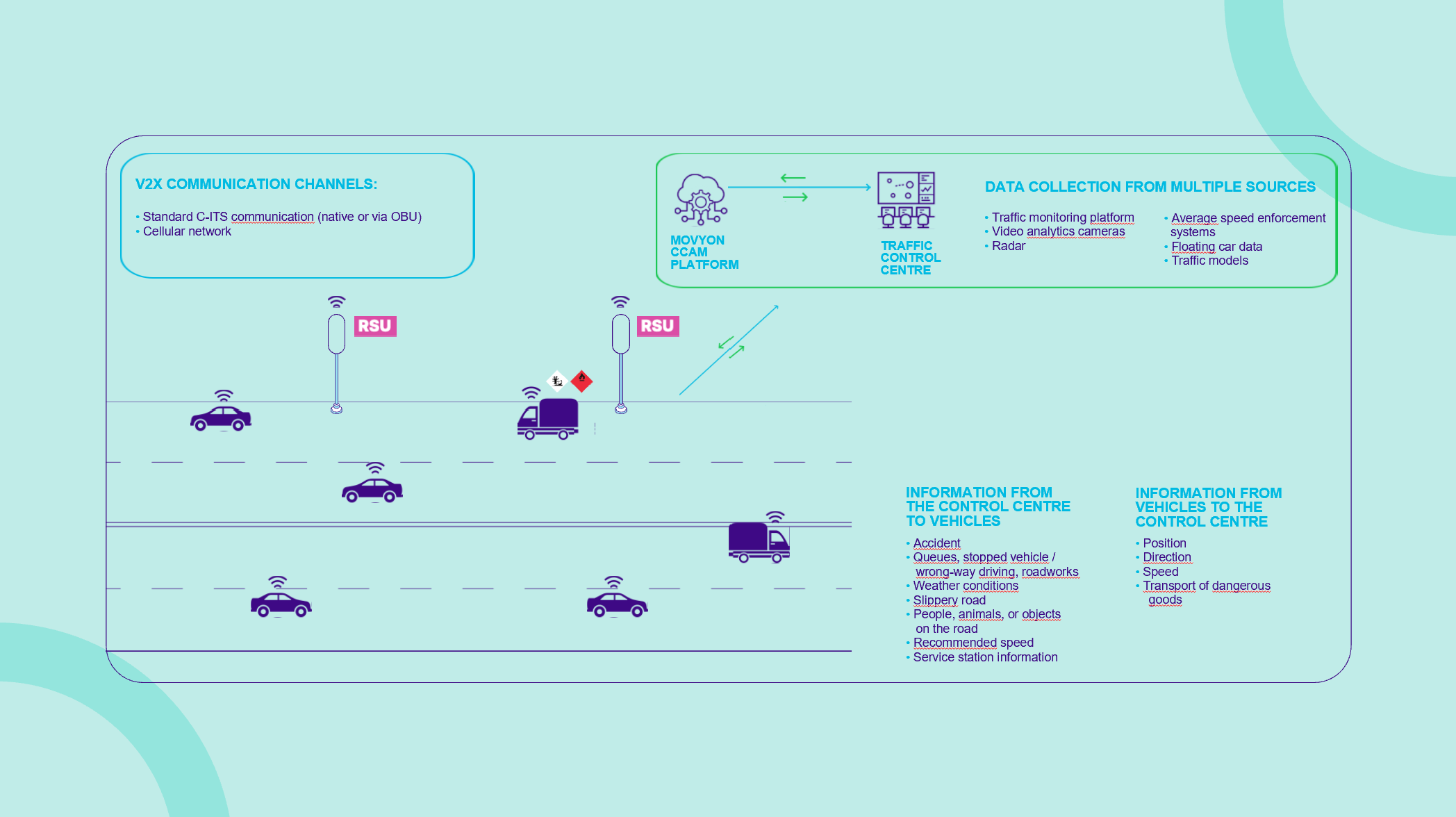
Roadside Units (C-ITS RSUs), produced by Movyon or by third parties are installed along the network, enabling two-way communication between infrastructure and connected vehicles.
Through the RSUs, the system can collect information relating to:
- vehicle position and speed;
- direction of travel;
- traffic congestion and anomalies;
- accidents and sudden braking events;
- road infrastructure conditions;
- the presence of roadworks or stationary vehicles;
- the transport of dangerous goods;
- vehicle anomalies or faults.
The Movyon C-ITS platform integrates and enhances this data together with information collected from traffic sensors, smart cameras and ITS systems already deployed along the network.
The information collected is processed centrally and transformed into operational insights, recommendations and real-time actions, reducing decision-making latency and increasing the effectiveness of cooperative services.
Today, RSUs represent the main communication channel between vehicles and infrastructure, but in the future C-ITS services may also rely on other networks, such as cellular connectivity, as these become more widespread and reliable for secure data exchange.

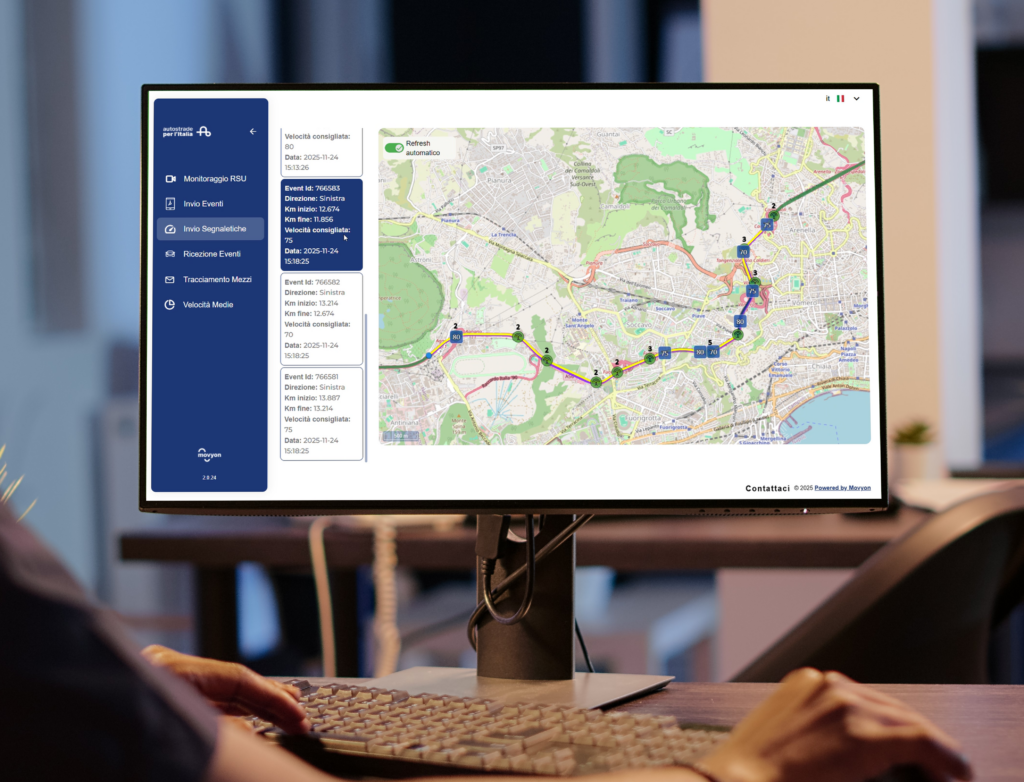
An integrated platform for road operators
Thanks to the automation of analysis and decision-making processes, the platform also enhances existing ITS technologies, such as Traffic Management Systems (TMS), dynamic lane management systems and dynamic speed regulation systems, improving their performance without increasing operational complexity.
The solution can be used as a standalone platform, with its own operational interface, or integrated directly into the road operator’s traffic control systems.
Through a unified and real-time view of the network, operators can:
- identify accidents, congestion and risk situations more quickly;
- improve the management of roadworks and critical events;
- optimise traffic flows;
- reduce response times;
- support faster and more effective operational decisions.
Infrastructure therefore becomes an active part of the mobility ecosystem, capable of continuously communicating with vehicles and supporting advanced traffic management, safety and connected mobility strategies.
Movyon’s technologies for Connected Mobility
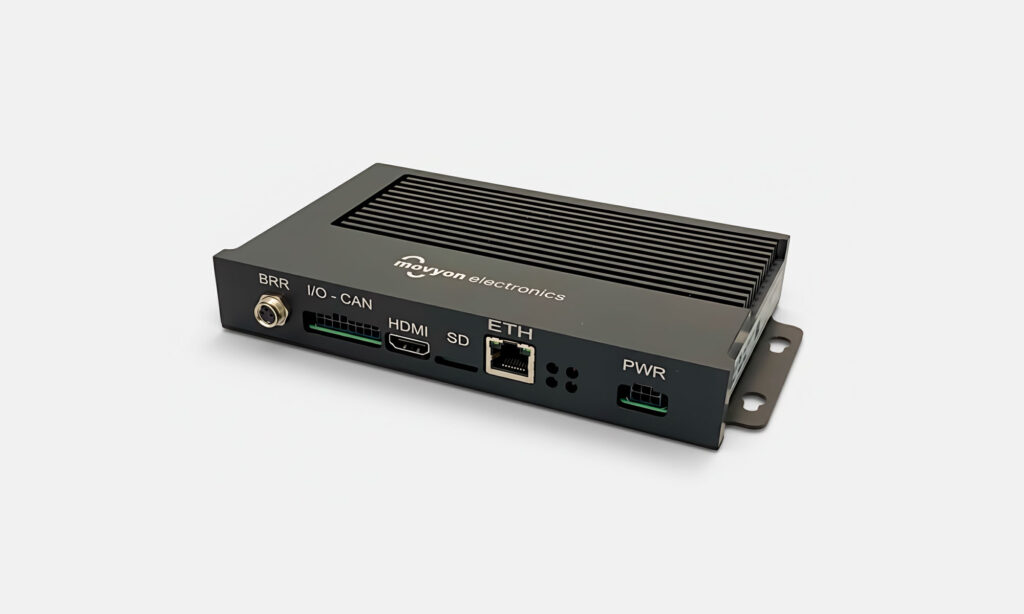
OBU C-ITS
OBU C-ITS is a smart device to be installed on a vehicle to enable V2X (Vehicle-to-Everything) two-way communication.
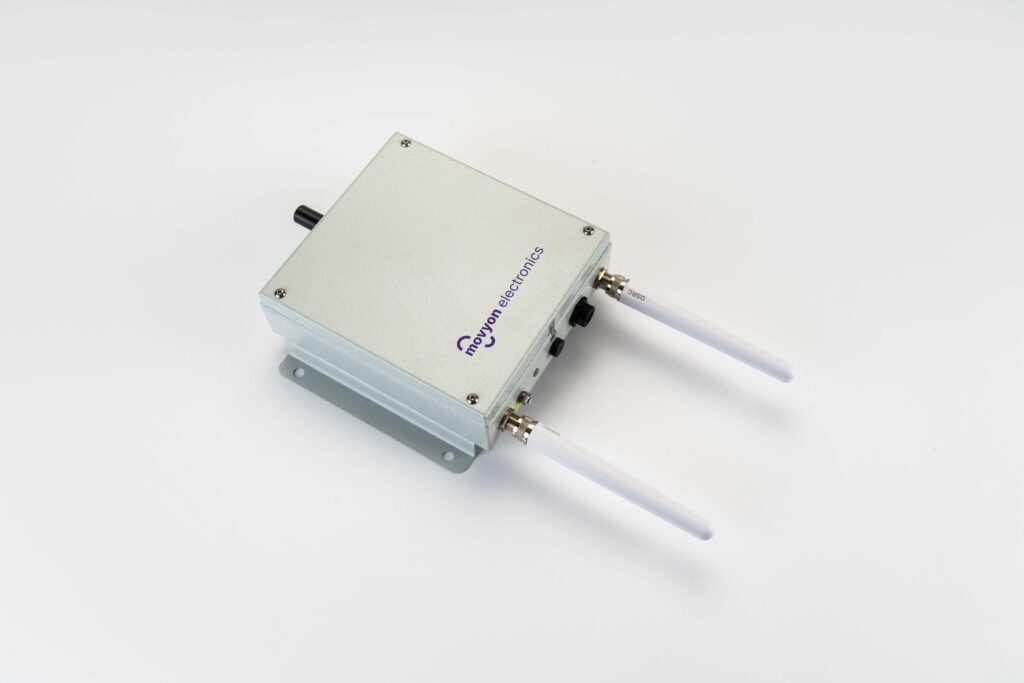
C-ITS RSU
Advanced Roadside Unit device designed to be installed along roads to enable two-way wireless communication between the road infrastructure and the On Board Unit in the vehicle.
The benefits of Movyon solutions for connected mobility

Data collection
about preferences, driving styles, road system info

Optimising
the traffic flow

Interoperability
of vehicle on-board units

Enhanced CX
shorter queues, more security and safety in road system