July 2023
Dynamic Traffic Flow System for Autostrade per l’Italia
The first section of the Fourth Dynamic Lane on the A4 between Cormano and Viale Certosa has been opened to traffic.
One of the most critical points of the entire national motorway network is located on the urban section of the A4 Turin–Trieste motorway. This route, used every day by peaks of up to 200,000 vehicles, a large proportion of which are heavy goods vehicles, runs through a densely urbanised area where the physical expansion of the infrastructure is impossible due to the proximity of buildings and already saturated spaces.
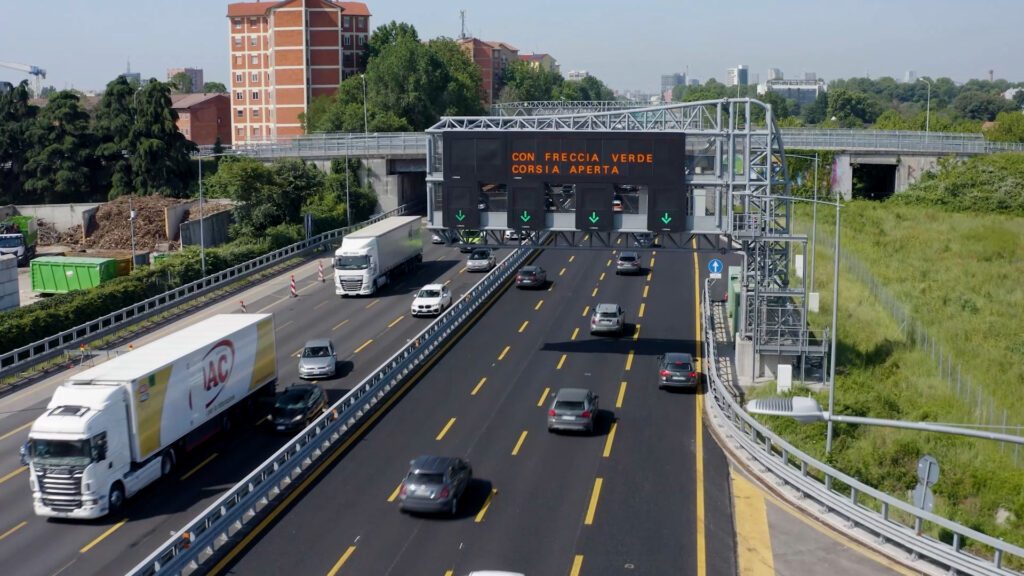
In this extremely high-traffic context, where vehicle flows are up to three times higher than the average on other sections managed by Autostrade per l’Italia, the need emerged to identify a solution capable of improving traffic flowwhile increasing safety, without further impact on the surrounding area, and with the aim of developing infrastructure able to adapt dynamically to real traffic conditions. The dynamic lane, now active in both directions between Cormano and Viale Certosa, responds to this complex need. This is a unique solution in Italy, allowing the hard shoulder to be used as a running lane during periods of heavier traffic, through an advanced technological system that constantly monitors the condition of the infrastructure and traffic flow.
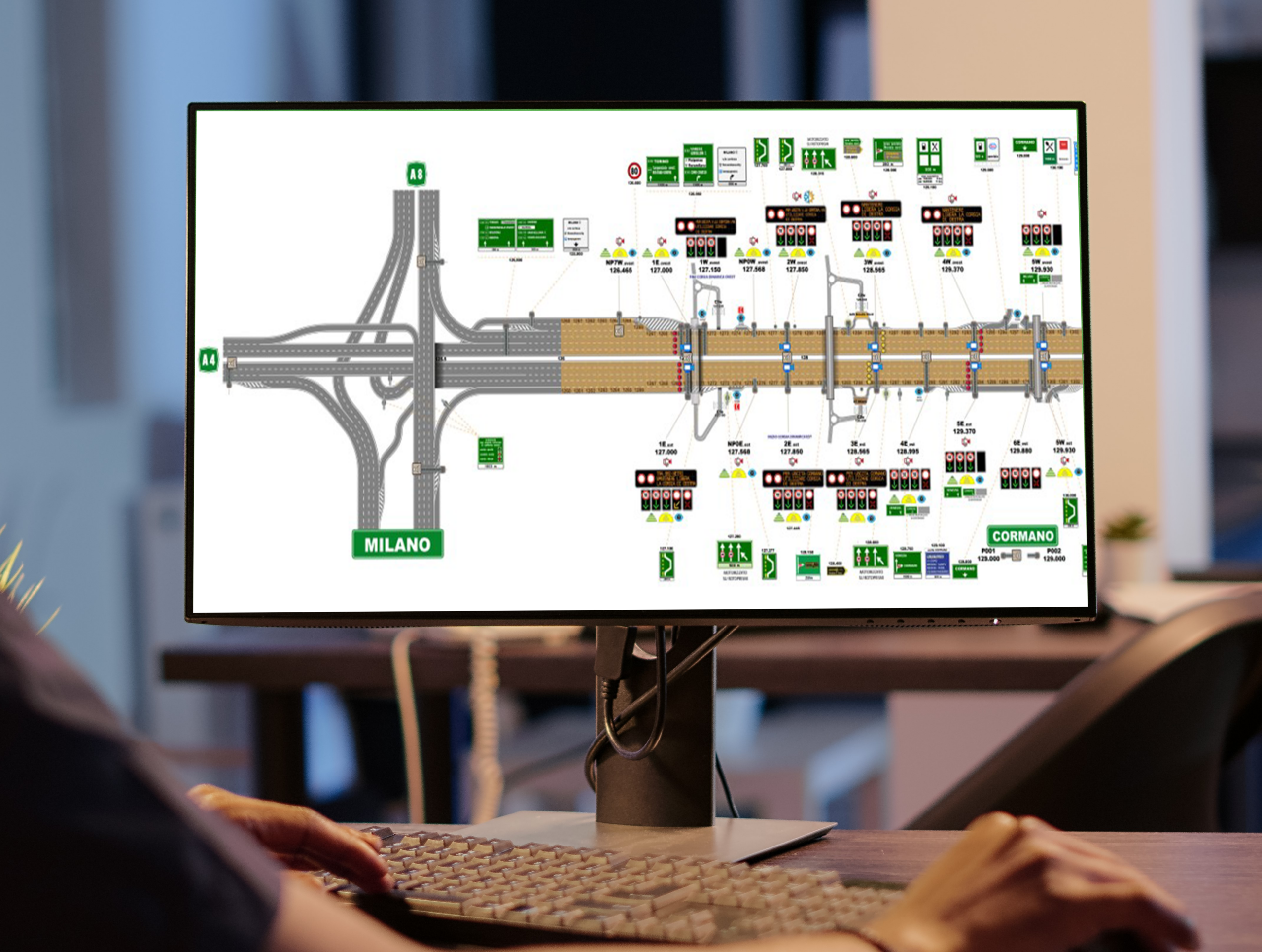
At the heart of the system is a digital platform developed by Movyon, capable of collecting and analysing data detected by sensors along the section in order to assess in real time whether the additional lane should be activated.
Thanks to sophisticated predictive algorithms, radar, laser scanners and AI-equipped cameras, the system continuously detects traffic, anomalies, accidents or stationary vehicles, activating the dynamic lane only under fully safe conditions. Variable message signs immediately inform road users when the lane is opened and display the new speed limits, ensuring an orderly and controlled traffic flow.
The result is infrastructure capable of dynamically adapting to traffic needs, reducing congestion, improving the travel experience and generating tangible environmental benefits. This effect is also reflected in emissions, with an estimated reduction of around 1.5 tonnes of CO₂ for every hour the lane is active.
The dynamic lane is a concrete example of how technological innovation can increase the capacity and efficiency of existing infrastructure, without the need for invasive works.